Value Added Services (VAS)
As a successful steel stockholder and a member of the Bianco Group, BIM prioritise precision and quality in our Value Added Services. Our advanced methods ensure that each cut meets the highest standards, catering to diverse industry needs. At the heart of our services lies an unwavering commitment to precision, quality, and customer satisfaction. With decades of expertise and a reputation built on trust, we deliver processing solutions that meet the most demanding specifications—on time, every time.
PLASMA CUTTING
This method uses a high-velocity jet of ionized gas (plasma) to cut through steel. It is suitable for various thicknesses and offers fast cutting speeds, making it ideal for large-scale production.
LASER CUTTING
This employs a focused beam of light to achieve high precision and clean edges. It is particularly effective for thin materials and intricate designs, providing excellent accuracy and minimal waste.
OXY-FUEL CUTTING
Using a flame produced by burning a mixture of oxygen and fuel gas, this method is effective for cutting thicker plates. While it may not offer the precision of laser or plasma cutting, it is a cost-effective solution for heavy-duty applications.
WATERJET CUTTING
High-pressure water mixed with abrasive materials to cut. It is is versatile and can handle various thicknesses without affecting the material’s properties, making it suitable for sensitive applications.
MECHANICAL CUTTING
Traditional methods such as sawing, shearing, and milling fall under this category. While slower than other methods, mechanical cutting is still relevant for specific applications and materials.
CNC PROFILING
Computer Numerical Control (CNC) technology automates the profiling process, allowing for high precision and repeatability. CNC machines can perform various cutting methods, including laser, plasma, and waterjet cutting.
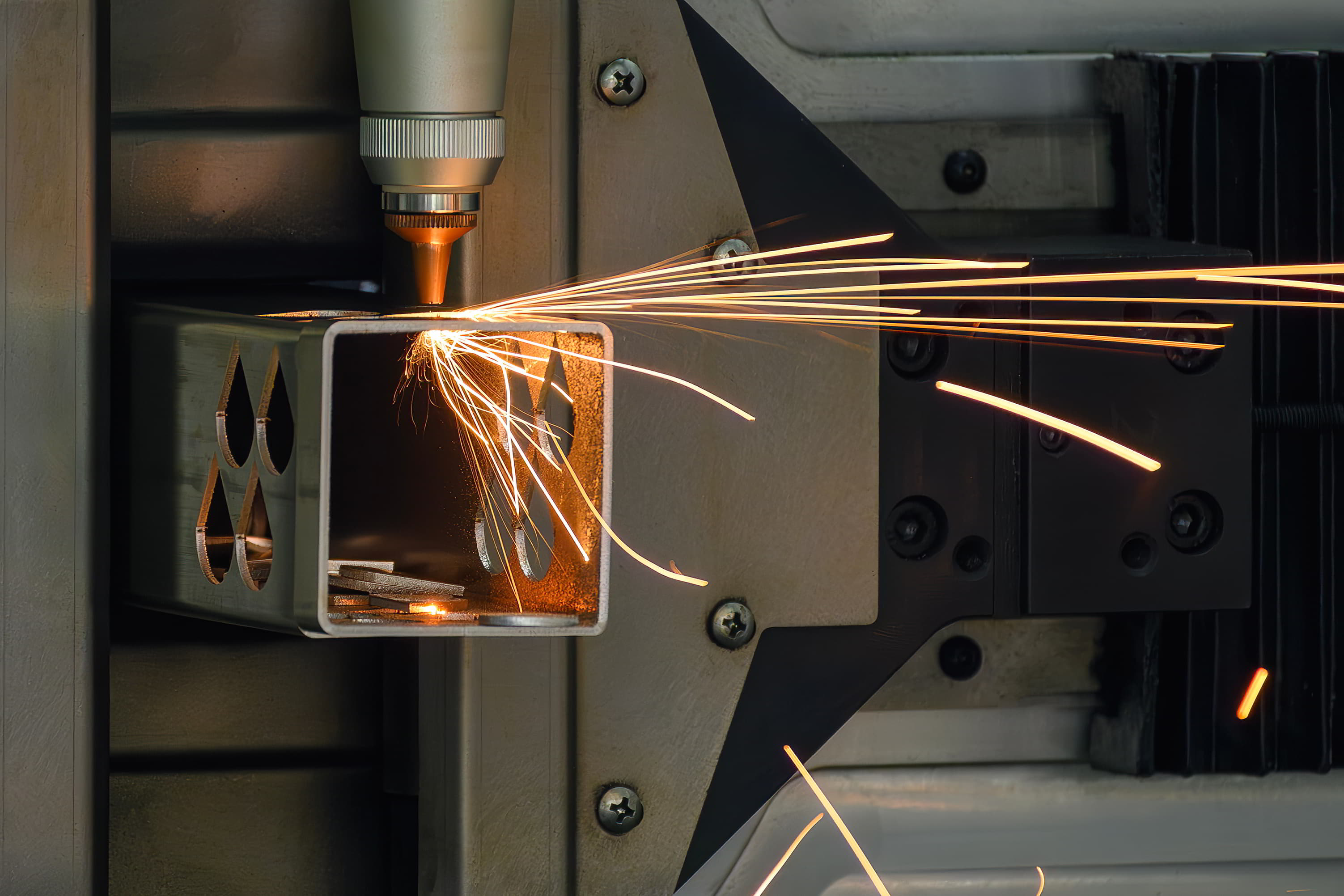
LT24 TUBE LASER
Tube laser cutting offers several benefits for manufacturing industries, including:
Precision and Accuracy: Tube laser cutting provides high levels of precision, allowing for intricate designs and tight tolerances, which is essential for complex components.
Versatility: It can cut a variety of shapes and profiles, including round, square, and rectangular tubes, as well as custom geometries, making it suitable for diverse applications.
Reduced Material Waste: The precision minimises kerf (material removed during cutting), which leads to less waste and better material utilization.
Speed and Efficiency: Tube laser cutting is faster than traditional cutting methods, increasing production rates and allowing for quicker turnaround times on projects.
Automation and Integration: Many laser systems can be automated and integrated into existing manufacturing processes, enhancing workflow and productivity.
Lower Production Costs: The combination of speed, reduced waste, and decreased labour costs can lower overall production expenses.
Quality of Finish: The process produces clean edges and smooth finishes, often requiring less post-processing work.
Ability to Cut Multiple Tubes Simultaneously: Some tube laser systems can cut multiple tubes at once, further increasing efficiency.
Flexibility in Design Changes: Adjusting designs is easier with laser cutting, allowing for quick modifications without significant setup changes.
Elimination of Secondary Operations: The precision of laser cutting can often eliminate the need for additional machining or finishing processes.
Enhanced Safety: Laser cutting reduces the need for physical contact with cutting tools, minimizing the risk of accidents in the manufacturing environment.
Capability for Marking and Engraving: Many tube laser cutting systems can also mark or engrave materials, adding identification or branding directly during the cutting process.
These benefits make tube laser cutting an advantageous choice for various
manufacturing sectors, enhancing both productivity and quality.